

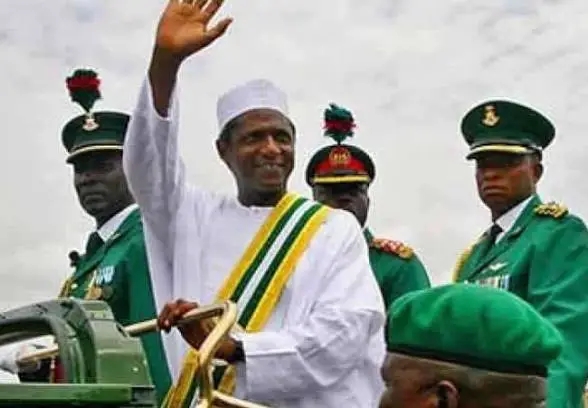
THE 7 POINT AGENDA.
By John Habila Murai.
There are leaders who command by volume, and then there are those who lead by quiet conviction. Alhaji Umaru Musa Yar’Adua, Katsina’s beloved son, was undeniably the latter.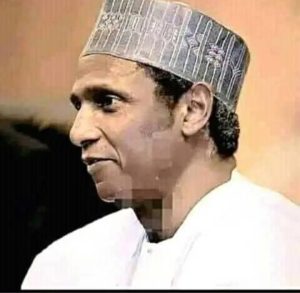
Though he left us over a decade ago, the echo of his brief but impactful tenure as President of the Federal Republic of Nigeria remains a poignant “what if” in the nation’s collective memory.
For those who remember, President Yar’Adua was an anomaly in the rough-and-tumble world of Nigerian politics.
He was soft-spoken, scholarly, and intensely private—a man who seemed uncomfortable with the pomp of power. Yet, behind that gentle demeanor was a steel resolve to fix a nation many had given up on.
He took the oath of office on May 29, 2007, inheriting a nation with deep-seated problems: a flawed electoral process, where he publicly acknowledged the loopholes in the electoral process that brought him and immediately appointed a renown and respected jurist late justice Uwais to reform the process, rampant corruption, and a restive Niger Delta.
Where others saw obstacles, Yar’Adua saw a mandate for change. His famous “RULE OF LAW” mantra wasn’t just a slogan; it was his operating system.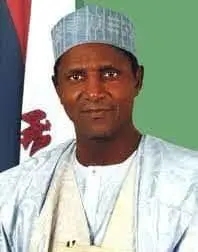
His legacy is etched in several profound ways:
THE 7 POINT AGENDA
The late President Umaru Musa Yar’Adua’s Seven-Point Agenda was a comprehensive blueprint announced on August 1, 2007. It was aimed to tackle Nigeria’s most critical challenges through a strategic seven-pillar plan: They were
1. POWER & ENERGY SECTOR REFORM:
Prioritizing the energy crisis to provide a reliable electricity supply for industry and daily life, with the goal of making Nigeria an industrial nation by 2015.
2. AGRICULTURE & FOOD SECURITY:
Modernizing farming to boost production five to tenfold and ensuring food security.
3. SECURITY (Niger DELTA & Others):
Resolving simmering conflicts through dialogue and initiating the landmark Presidential Amnesty Program for militants.
4. WEALTH CREATION & EMPLOYMENT:
Addressing poverty and unemployment to build an economy that works for ordinary Nigerians.
5. LAND REFORM & HOUSING:
Introducing reforms to make land accessible for commercial farming, business, and easier home ownership.
6. MASS TRANSPORTATION:
Modernizing the nation’s road and railway systems to connect commercial centers and improve the economy.
7. EDUCATION & HUMAN CAPITAL:
Guaranteeing quality education to build a globally competitive workforce.
Late President Yar’Adua also placed a strong emphasis on Electoral Reform and Anti-Corruption, which were inseparable from his vision for these seven points Agenda.
The Niger Delta Amnesty: Perhaps his most courageous act.
Instead of a military solution, he chose the path of peace, offering amnesty to militants, disarming them, and initiating a program that brought relative calm to the creeks and boosted oil production.
Electoral Integrity: In a stunning move for a sitting president, he publicly admitted that the election that brought him to power was imperfect and set up the Uwais Panel, whose recommendations laid the groundwork for the electoral reforms we see today.
Financial Prudence & Transparency:
Known for his personal austerity, he was the first Nigerian president to publicly declare his assets upon taking office and again upon leaving—a standard of transparency that remains a benchmark for public officers.
Also Read:Ƴan Nijeriya 62 na tsare a Uganda kuma an hana su ganawa da lauyoyi
But perhaps his greatest legacy was his humanity.
He was famously quoted saying, “MY AMBITION IS NOT WORTH THE BLOOD OF ANY NIGERIAN.”
In a nation where political ambition has often come at a terrible cost, those words remain a haunting reminder of what servant leadership truly looks like and mean.
His presidency was tragically cut short by a protracted illness (pericarditis), and his passing on May 5, 2010, felt like a premature sunset on a new dawn.
The silence that followed his death was not just grief, but the weight of potential unfulfilled.
Today, looking back at a world of louder, brasher politics, the memory of Umaru Musa Yar’Adua stands as a gentle but powerful lesson: that you do not need to shout to be heard, and that integrity is the most enduring currency a leader can possess.
May his gentle soul continue to rest in perfect peace.
He was, and remains, a president Nigeria did not know well enough, but one we will never forget.